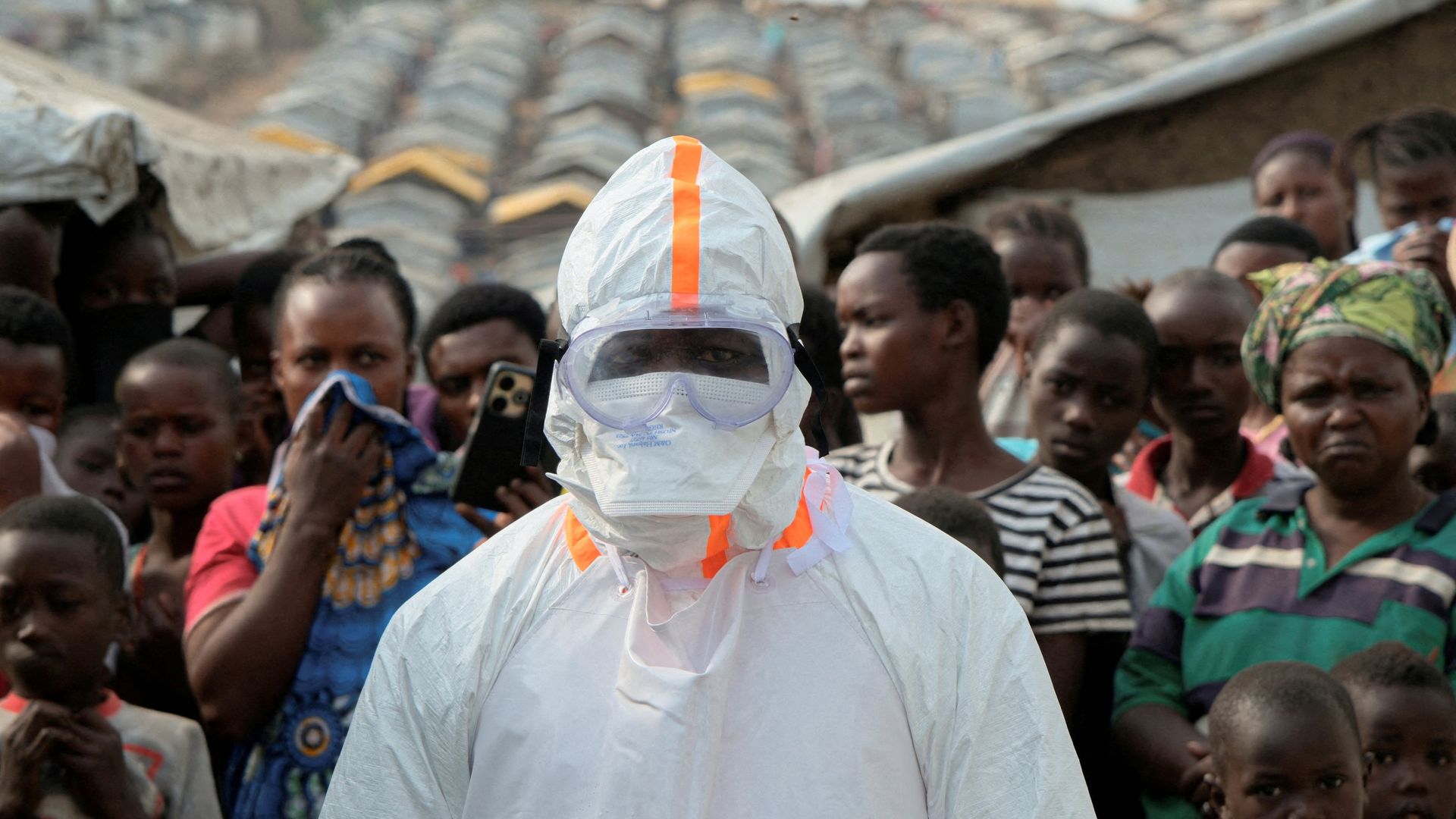
The Democratic Republic of Congo (DRC) has reported more than 3,000 confirmed cases of Ebola, marking a significant escalation in the ongoing epidemic. This surge comes as health workers continue to battle the disease across five provinces [1]. The latest outbreak is now considered the second-deadliest in history and is spreading at an unprecedented rate [4], with officials warning that the world must pay more attention to this crisis.
The situation has worsened, with cases rising by 1,000 within just ten days [3]. This rapid increase underscores the urgent need for effective containment measures. Health workers are working tirelessly to control the outbreak, but they face significant challenges due to a lack of approved vaccines or treatments for the Bundibugyo strain [5], which is currently circulating in the region.
The World Health Organization (WHO) has classified this as the worst Ebola outbreak ever recorded in DRC [7]. The current death toll stands at 1,587 people, with health officials emphasizing that more cases are expected to be reported. This rapid spread and high mortality rate have led some experts to describe it as a "catastrophic" situation [6].